Grey Hair & Scalp Aging: Why Your Hair Texture Changes as You Age
While much of the conversation around ageing and hair focuses on hair loss, many people find that the most striking transition is actually a significant texture change.
You may wake up one day and realise your hair no longer feels soft or behaves the way it did a decade ago.
Understanding the biological causes of hair texture shifts is essential for maintaining hair health and confidence as we age. From wiry greys to thinning diameters, these changes in hair texture are often the first signs that your hair needs a different level of clinical care.
What drives changes in hair texture?
It is a common misconception that hair texture changes are solely due to external factors. In reality, the most profound changes in hair start deep within the follicle. Over time, several internal processes alter the texture of each individual strand:
The Loss of Lipids: As the scalp ages, the production of natural sebum slows down. Without these protective oils, your hair loses its ability to retain moisture, leading to a “dry” or “brittle” texture.
Melanin and Texture: When hair loses its pigment and turns grey with age, the internal structure of the hair actually changes. Grey hair strands often have a thicker, more irregular cuticle layer, which is what makes them feel “wiry” or “unruly” compared to pigmented hair.
Diameter Reduction: Changes in your hormone levels can cause the follicle to shrink. This results in a texture change where the hair becomes finer and more fragile, making it more prone to heat damage and breakage.
Managing hair texture changes at home
If you’ve noticed a change in how your strands react to your usual hair care routine, it may be time to audit your hair products. Your hair is a reflection of its environment, and what worked in your 20s may not be the same solution you need now.
Limit Heat Styling: Because ageing hair is naturally drier, heat styling can accelerate the degradation of the protein bonds. If you must use heat, always apply a protectant on your hair to prevent permanent heat damage.
Switch Your Hair Care Products: Look for hair care products specifically formulated for “ageing” or “brittle” hair types. These typically contain smaller molecular proteins that can penetrate a hardened cuticle.
Hydration is Key: If you’re dealing with wiry hair textures, a weekly deep-conditioning mask can help soften the texture and improve manageability.
Professional Restoration: The CuticleLock Hair Treatment
When your hair texture becomes too difficult to manage with standard hair products, professional intervention can help bring the hair and scalp back into balance. At SSKINS, we offer the CuticleLock Hair Treatment, a restorative therapy designed specifically for dry, dull, or fragile strands.
When your scalp and hair feel stressed or easily weighed down, this treatment helps reset the scalp condition and strengthens the hair from the roots. The process begins with a deep purifying cleanse to break down impurities, followed by a warm oxygen-infusion steam. This steam encourages improved moisture absorption and soothes the cuticle layer, which is critical for smoothing out the “wiry” feel associated with changes in hair texture.
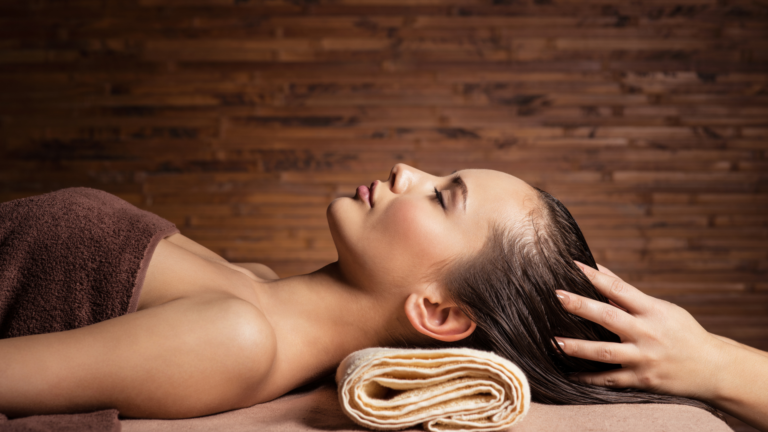
To further enhance renewal, a Scalp Meridian massage stimulates microcirculation, supporting healthier hair function where it matters most. As each layer of care is infused, the hair transforms into smoother, stronger, and more resilient strands. This treatment is ideal if you suffer from rough or unruly strands that have lost their youthful vitality over time.
Accepting changes in your appearance is part of the ageing process, but hair texture change doesn’t have to mean a loss of quality. By adjusting your hair care routine to focus on cuticle health and scalp nourishment, you can manage the effects of time effectively.
Whether you are noticing the first signs of hair thinning or simply a shift in how your hair texture feels to the touch, proactive care is the best way to ensure your hair remains your crowning glory.
We’ve all been there. You look in the mirror after waking up, and your jawline seems slightly less defined, your cheeks rounder, and your eyes look like you didn’t sleep at all. It is a frustrating way to start the day, but it isn’t permanent.
What you are seeing is simply a temporary buildup of fluid trapped in your facial tissues, a process often caused by lymphatic stagnation.
The glass skin trend has dominated global beauty routines for years, promising a complexion so luminous, smooth, and translucent that it resembles a pane of glass.
Originating from K-beauty, the glass skin look is seen as an ideal beauty standard especially in Asia, representing a uniform skin tone with luminosity and radiance.
When it comes to body contouring, many people in Singapore find themselves frustrated when a slimming treatment doesn’t yield the expected “flat stomach.” The reason usually lies in a misunderstanding of the two distinct types of fat sitting beneath the skin.
To achieve your body goals, it is essential to distinguish between the fat you can pinch and the fat you cannot see. Here, we break down the science of subcutaneous versus visceral fat, and exactly how an RF slimming treatment fits into your journey.
While modern hair care often relies on chemical interventions, there is a growing appreciation for holistic methods that integrate Traditional Chinese Medicine (TCM) with contemporary scalp science.
A scalp meridian massage is not merely a luxury at a hair salon; it is a targeted physiological scalp treatment designed to stimulate blood circulation and unblock energy channels that support long-term hair growth.
The concept of intermittent fasting has officially moved from the diet world to the vanity.
What is skin fasting? Does “doing nothing” for your skin yield results, or is it just TikTok science?
The idea of taking a break from a complex skincare routine is often misunderstood as a “cure,” when it is actually a diagnostic tool to restore your skin’s natural equilibrium.