As collagen (the primary structural protein in the human body) begins to decline as we age, this naturally thinner skin loses its “scaffolding” more rapidly.
The result is a “crepey” texture and a loss of definition. To combat this, we must look at a dual approach: external clinical care and the internal biological support provided by collagen boosting foods.
To understand why your neck requires specialised care, we must look at the connective tissue. The dermis of the neck has a lower concentration of fibroblasts, the cells responsible for collagen synthesis. Furthermore, the constant mechanical stress of movement places immense strain on the existing collagen fibres.
By the time you notice sagging, the internal stores of collagen have likely been depleting at a rate of roughly 1% per year since your mid-20s. To slow this process, your body needs a steady supply of specific amino acids like proline, glycine, and hydroxyproline to make new fibres.
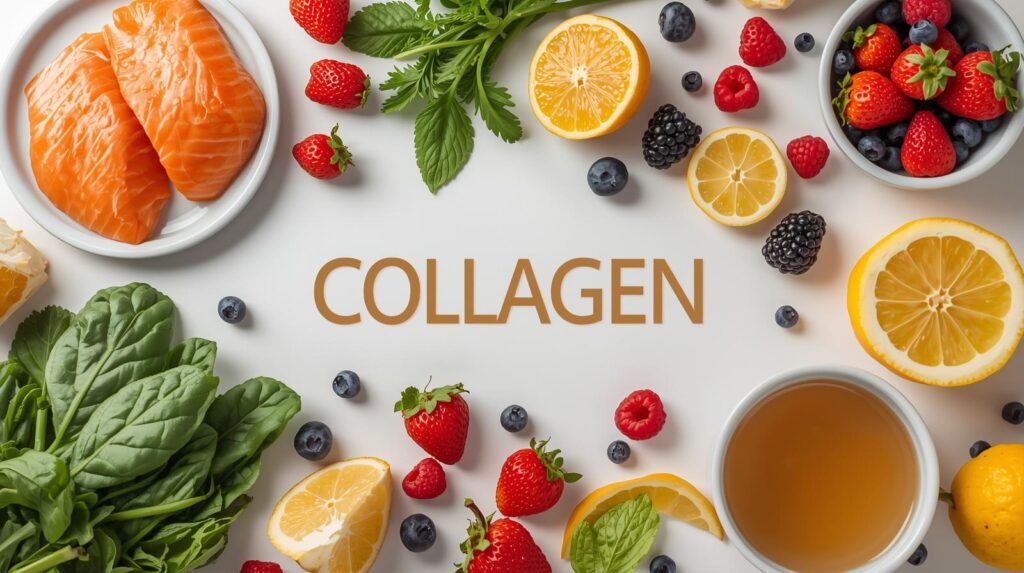
While topical treatments are essential, providing the nutritional precursors for collagen production is equally vital. Your diet serves as the raw material factory for your skin’s repair mechanisms.
Bone broth is perhaps the most famous source of collagen in traditional diets. When simmered for long periods, animal bones release bioavailable collagen and amino acids. Consuming bone broth provides a direct source of the building blocks needed for connective tissue repair. Similarly, collagen rich proteins like chicken and fish are essential to provide the nitrogen balance required for collagen synthesis.
Top Foods: Slow-simmered beef marrow bones, chicken feet (high in skin-replenishing collagen), and wild-caught fish skin.
Vitamin C is a critical cofactor in the hydroxylation of collagen molecules. Without sufficient vitamin C, the body cannot cross-link collagen fibres, meaning even a diet rich in collagen won’t result in firmer skin. Foods high in this vitamin, such as citrus fruits and berries, are non-negotiable for collagen production.
Top Foods: Guava, red bell peppers, and citrus fruits like pomelo or oranges.
Leafy greens such as spinach and kale provide chlorophyll, which research suggests can increase the precursor to collagen in the skin. These leafy greens are also high in vitamin c and antioxidants that protect existing collagen from oxidative damage.
Top Foods: Bok choy, watercress, and kale.
In Singapore, our food culture is deeply influenced by Traditional Chinese Medicine (TCM). Beliefs about “cooling” foods or the skin-firming benefits of specific delicacies are common. From a clinical perspective, which is better: tradition or science?
While TCM prizes these as being rich in collagen, the collagen is often in a large molecular form that your body may not absorb efficiently through digestion alone.
However, recent clinical studies have shown that sea cucumber is actually a significant source of collagen polypeptides which is highly bioavailable when processed correctly. The key is the “hydrolyzation”, breaking the protein down into smaller peptides that the gut can actually transport to the bloodstream.
Often marketed as “the affordable bird’s nest,” peach gum is a staple in local dessert soups.
From a purely medical standpoint, peach gum contains almost zero collagen. It is composed of plant-based polysaccharides and dietary fibre. While excellent for digestive health and “cooling” the body according to TCM, it does not provide the amino acids required for collagen synthesis.
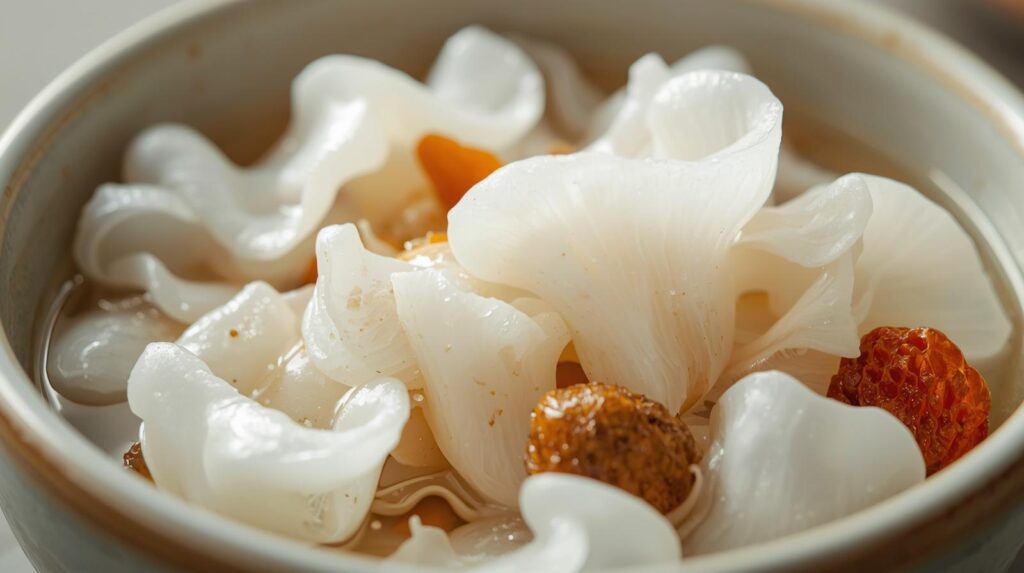
Another popular “beauty food,” snow fungus is often praised for its ability to mimic hyaluronic acid.
However, like peach gum, this is a complex carbohydrate, not a protein. While it cannot build collagen directly, it is clinically recognised for its ability to hold over 500 times its weight in water. This helps with systemic hydration, which indirectly supports the “plumpness” of the skin on the neck.
The traditional belief is that eating the “springy” texture of pig’s trotters translates to springy skin.
While rich in collagen, these are also exceptionally high in saturated fats. The systemic inflammation caused by a high-fat diet may actually accelerate collagen breakdown (glycation), potentially cancelling out the benefits of the ingested protein.
While these foods are collagen rich, they are not “magic bullets.” Clinical research suggests that collagen supplementation using hydrolysed peptides is often more effective because the molecules are small enough to enter the bloodstream and trigger fibroblasts in the skin.
By feeding your skin from the inside with foods to support collagen and treating it from the outside with clinical precision, you can maintain a firmer, smoother, and more youthful-looking neck for years to come.