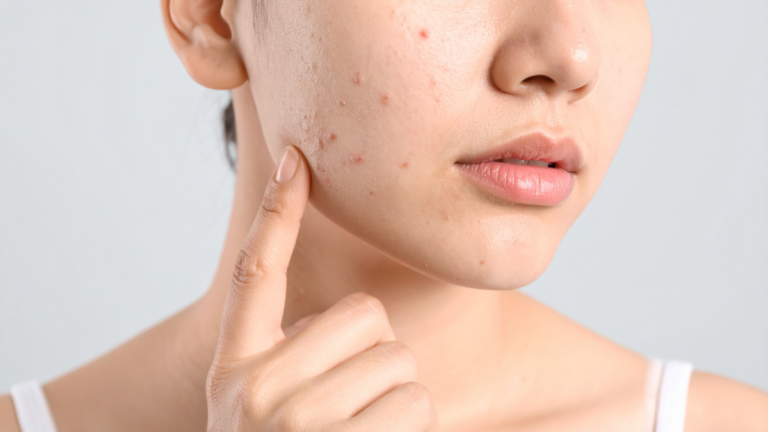
Understanding the science behind these changes is the first step in finding an effective ozempic face treatment that restores a youthful, healthy appearance without resorting to invasive surgery.
Disclaimer: This article is for informational purposes only and does not constitute medical advice. For a formal diagnosis or clinical prescription, please consult a qualified healthcare professional. If you are unsure about your skin condition, you should always seek professional doctor advice.
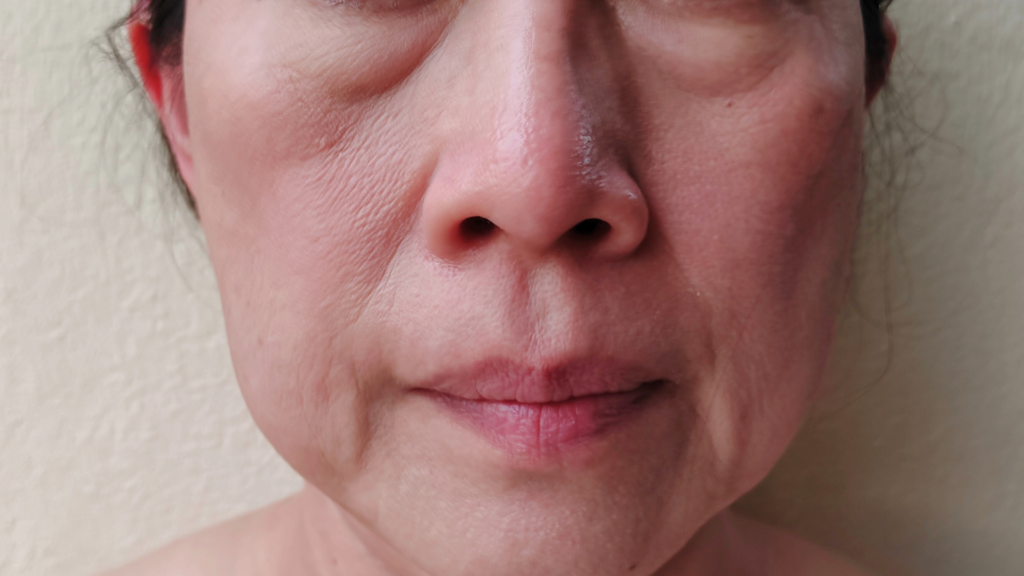
Ozempic face refers to the gaunt, hollowed, or aged appearance that sometimes follows significant weight loss.
It is important to note that this is not a direct side effect of the “Ozempic” medication itself. Instead, ozempic face and similar concerns are the result of rapid weight loss from any source – be it medication, diet, or bariatric surgery.
Weight loss can significantly alter the skin’s composition.
Our skin relies on collagen and elastin to maintain its “bounce.” During rapid weight loss, the depletion of facial fat results in laxity of the overlying skin which translates to deeper nasolabial folds and jowls.
When we lose fat in the face, we lose the scaffolding that keeps the skin taut. Specifically, the loss of deep facial fat pads (particularly in the cheeks and midface) results in volume loss. Because the skin and underlying tissues cannot always retract as fast as the fat disappears, the result is loose skin and a more prominent appearance of wrinkles.
Furthermore, chronic weight loss can sometimes lead to a “hollowed” look in areas like the temples and under the eyes. These are often the first signs of aging, and they are accelerated when weight loss occurs over a short duration. Understanding that this is a structural issue and not just a surface-level one, is key to treating ozempic face effectively.
The term “Ozempic Face” was coined by celebrity dermatologist Dr Paul Jarrod Frank after he noticed a recurring pattern of gaunt, aged facial features among patients using GLP-1 medications.
Ozempic is a brand name for semaglutide, a medication originally developed to treat Type 2 diabetes. It works by mimicking a natural hormone (GLP-1) that regulates blood sugar and slows down digestion, making you feel fuller for longer.
While the medication is effective for its intended purpose, the phrase became a viral catch-all for the “hollowed” look that accompanies the medication’s success.
It is important to reiterate that the drug doesn’t target facial fat specifically; rather, it facilitates such efficient weight loss that the body’s fat stores are depleted more quickly than the skin can naturally adapt.

A common question is whether your skin will eventually “snap back” if you simply do nothing. The answer is: it depends, and only to a point.
Examples of such relatively harsh actives include:
Initial Months: After weight loss, the skin does undergo a period of natural retraction. You may see slight improvements over the first 6 to 12 months as collagen fibres slowly reorganise.
The Plateau: Generally, after 12 to 18 months, any loose skin that remains is unlikely to tighten significantly on its own. At this stage, the elastic fibres have likely been stretched beyond their “elastic limit.”
Factors at Play: Your age, genetics, and the total amount of weight loss are the deciding factors. Younger skin with higher collagen density will retract more effectively than skin that has been through multiple weight cycles or significant sun damage.
If you choose to do nothing, the skin will eventually settle into its new shape, but the volume loss in the cheeks and midface will remain. Without intervention, the “gaunt” look of ozempic face often becomes a permanent feature of your new profile.
This is why many choose to intervene early with skin tightening treatments and high-performance products to support the skin’s structure while it is still in its recovery phase.
To treat ozempic face, a dual approach is required: we must support the skin’s surface while addressing the deeper volume loss.
While topical products cannot replace lost facial fat, they are essential for improving skin density and “snap-back.” At SSKINS, we recommend medically-backed formulations from SkinCeuticals that target the structural proteins of the skin.
SkinCeuticals Hyaluronic Acid Intensifier (H.A. Multi-Glycan): This serum is vital for ozempic face because it helps to amplify the skin’s hyaluronic acid levels. It improves hydration and temporarily plumps the skin, softening the appearance of lines.
SkinCeuticals A.G.E. Interrupter Advanced: Rapid weight loss often makes the skin look thinner. This cream targets the glycation process, which degrades collagen. It helps to firm the skin and improve the look of sagging skin by protecting the existing collagen matrix.
In some cases, medical treatments that restore volume may be considered.
Your doctor may suggest dermal fillers or biostimulators to treat deep volume loss. These treatments physically replace the facial fat that was lost, “re-inflating” the cheeks and temples.
For those seeking a clinical perspective in Singapore, look for a Doctor that advocates for a conservative, natural-looking approach to ensure the results do not look “overfilled.”
Achieving your weight loss goals is a significant milestone, and ozempic face should not diminish that success. With the appropriate measures, you can manage the side effect of volume loss effectively.
Ozempic face refers to the gaunt or hollowed appearance in the face that can occur following rapid weight loss while using GLP-1 medications like semaglutide.
This phenomenon is not a direct side effect of the medication itself; rather, it is caused by the sudden loss of facial fat pads that provide structural support to the skin. When this “scaffolding” is removed quickly, it often results in sagging skin, deeper wrinkles, and a more aged appearance in the cheeks and mid-face.
The most effective ozempic face treatment plans typically involve a combination of volume restoration and skin tightening treatments. Clinical treatment options often include dermal fillers or biostimulators to replace lost facial fat, alongside non-invasive procedures such as the Alma Timeless Pro to firm loose skin.
Additionally, using high-performance skincare containing hyaluronic acid and collagen-supporting ingredients can help improve the appearance of skin density and elasticity from the surface.
While you cannot choose where your body loses fat, you can mitigate the signs of ozempic face by focusing on skin health throughout your weight loss journey.
Maintaining a high-protein diet and staying hydrated supports your skin’s structural integrity. Incorporating medical-grade topicals, such as SkinCeuticals A.G.E. Interrupter Advanced, early in the process can help protect the collagen matrix, making the skin more resilient as volume loss occurs in the face.