Ectoin: The New “Super-Ingredient” for Protecting Skin Against Urban Pollution

In the evolving landscape of skin care, few skincare ingredients have garnered as much clinical interest recently as Ectoin. As Singapore’s urban environment places constant stress on the skin, the search for a robust skincare ingredient that offers more than just superficial hydration has led to the rise of this “super-molecule.”

What is Ectoin and How Does Ectoin Work?

Ectoin is an extremolyte – a small, highly stable molecule produced by microorganisms that thrive in extreme environments, such as salt lakes and deserts. Its primary function is to protect these organisms from dehydration and intense UV radiation.

But how does ectoin translate to skin health?

When applied topically, ectoin has the unique ability to bind water molecules together to create a protective layer known as an “Ectoin Hydro Complex.” This complex surrounds cells, proteins, and enzymes, forming a stabilising shell that prevents water loss and shields the skin from environmental damage.

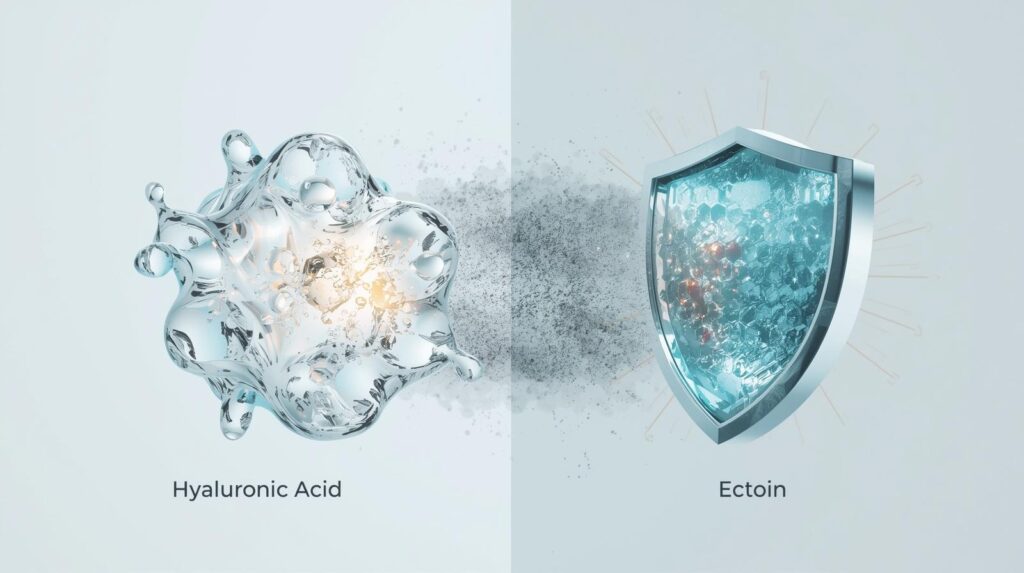
Ectoin vs. Hyaluronic Acid: The Sponge vs. The Shield

how to use ectoin

Skincare nerds might see an awful similarity between Ectoin and Hyaluronic Acid, as both are powerhouses for skin hydration. However, their mechanisms of action are fundamentally different.

  • Hyaluronic Acid (The Sponge): This is a classic humectant. Its “superpower” is its ability to draw moisture from the air and bind it to the skin, holding up to 1,000 times its weight in water. It provides that immediate, “glass skin” plumpness we all recognise. However, in dry or air-conditioned environments, hyaluronic acid can sometimes draw moisture out of your deeper layers if it isn’t sealed in properly.

  • Ectoin (The Shield): Ectoin is not just a humectant; it is a stabiliser. Instead of just “grabbing” water, it organises the water molecules already present in the skin into a dense, crystalline structure. This creates the “Ectoin Hydro Complex”, a literal shield that prevents water loss and protects your cellular proteins from being denatured by environmental damage, heat, and pollution.

In short: Hyaluronic acid floods the skin with moisture, while ectoin builds the fortress that keeps that moisture inside while repelling external stressors. One provides the hydration, and the other ensures its survival.

When you utilise both of these ingredients that work in tandem, you achieve up to double the efficacy in maintaining skin hydration. This combination is suitable for every skin type, from oily-congested to chronically dry.

The Top Ectoin Skin Benefits for Urban Living

The skin benefits of ectoin go far beyond standard skincare. While hyaluronic acid is famed for its ability to hold water, ectoin provides a biological shield that addresses several modern skin concerns simultaneously.

  • Advanced Barrier Support: Ectoin in your skincare acts as a stabiliser for the skin barrier. It reinforces the barrier against irritants and pollutants found in Singapore’s city air.

  • Prevention of Transepidermal Water Loss: By forming a protective hydro-shell, ectoin significantly reduces water loss and moisture loss, keeping skin hydration levels stable even in air-conditioned environments.

  • Protection Against Oxidative Stress: Ectoin protects the skin from the cellular damage caused by blue light and pollution, which are known drivers of premature skin ageing.

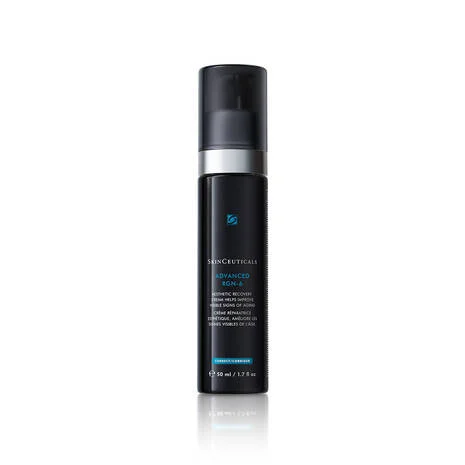
Clinical Recommendation: SkinCeuticals RGN-6 Skin Repair Cream

For those looking to add to their skincare a professional-grade solution, we recommend the SkinCeuticals Advanced RGN-6 Skin Repair Cream. This advanced serum is a prime example of how modern skincare products are evolving.

While the formula is powered by a potent 6% Regenerative Complex including Glyco-Repair and Niacinamide to restore your skin’s structural integrity, it is the strategic inclusion of ectoin that makes it a standout skincare tool for the Singapore climate.

In this formula, ectoin acts as a bio-stabiliser, protecting the skin from oxidative stress and ensuring the barrier remains resilient even after intensive treatments. By forming a protective “second skin,” it significantly reduces water loss and accelerates the skin’s ability to repair itself, making it an essential add to any high-performance skincare routine.

Is Ectoin Suitable for Your Skin Type?

One of the greatest properties of ectoin is its versatility.

Ectoin is a natural stress-protection molecule that soothes inflammation and reduces redness, making it perfect for sensitive skin.

Because ectoin is highly stable and non-reactive, it can be easily integrated with other active properties like Vitamin C or Retinol.

Whether your skin type is oily, dry, or combination, ectoin helps to balance the skin barrier and prevent the moisture loss that leads to sensitivity.

Final Thoughts

As we understand more about how urban stressors affect the skin, ectoin is proving to be more than just a trend; it is a fundamental skincare ingredient for the modern age.

You might enjoy these

You might
enjoy these

Vitamin C is often hailed as a “holy grail” for achieving a radiant complexion, yet with so many products flooding the market, many wonder if the effects of Vitamin C are scientifically grounded or merely a well-marketed fad.
For many, the gym is a place of transformation, but while you are smashing your fitness goals, your complexion might be paying the price.

The combination of sweat, heat, and friction creates a breeding ground for bacteria, often leading to the frustrating phenomenon of “gym acne.”
While much of the conversation around ageing and hair focuses on hair loss, many people find that the most striking transition is actually a significant texture change.

You may wake up one day and realise your hair no longer feels soft or behaves the way it did a decade ago.
Search

Root Strenghtening

Choose This IF

Improved Follicle Anchor

Enhanced Nutrient Delivery

Denser Hair

PURIFY

Choose This IF

Regulates Sebum Production

Increases Volume At The Roots

pH Balance

CRYOCALM

Choose This IF

Suppress Inflammation & Redness

Deep Hydration

Epidermal Barrier Resilience