This “big shift” is driven by a precipitous drop in estrogen levels, which acts as a master regulator for skin health. Understanding how to adapt your skincare for menopause is essential for maintaining structural integrity and comfort during this hormonal evolution.
Clinical data suggests that the first five years of menopause can result in a loss of up to 30% of dermal collagen. This rapid decline fundamentally alters the architecture of the skin, leading to a noticeable loss of volume and a “deflated” appearance.
When hormone levels fluctuate, the impact on the skin is immediate. Estrogen is responsible for stimulating the production of collagen and elastin, the proteins that provide “bounce” and resilience. As these levels taper off, collagen loss accelerates, resulting in thinner, more fragile tissue.
Beyond structural changes, the drop in estrogen affects the sebaceous glands and the production of acid mucopolysaccharides, such as hyaluronic acid. This leads to a compromised barrier function and chronic dry skin. Without these natural hydrators, your skin during menopause becomes prone to sensitivity and a dull, parched texture that topical moisturisers alone struggle to fix.
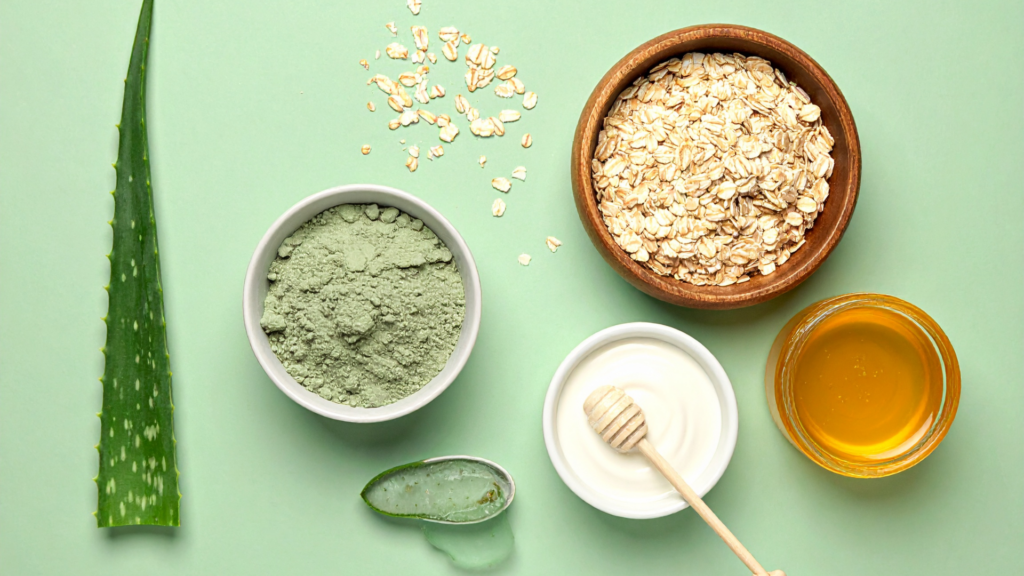
To address menopause skin effectively, your skincare routine must shift from prevention to active replenishment.
These plant-derived compounds can mimic the effects of estrogen on the skin without systemic absorption. They are vital in menopause skincare to help stimulate collagen production and improve density.
While looking for phytoestrogens in skincare, you won’t usually see the word “phytoestrogen” on the label. Instead, you need to look for specific botanical extracts that are rich in isoflavones, the bioactive compounds that actually dock onto the skin’s estrogen receptors.
Here are the key ingredients to look for, along with the clinical “why” behind them:
This is the gold standard in hormonal skincare. Soy contains high concentrations of genistein and daidzein.
The Science: Genistein is a potent antioxidant that specifically inhibits the enzymes (metalloproteinases) that break down collagen. It effectively tells the skin to stop “eating” its own structural support.
On the Label: Soy Isoflavones, Glycine Soja Protein, or Fermented Soy.
Red clover is unique because it contains all four major isoflavones.
The Science: Clinical studies show that Red Clover can increase skin thickness and improve vascularization. By improving blood flow to the surface of the skin, it helps resolve that “pallid” or “greyish” look often seen in menopausal skin.
On the Label: Trifolium Pratense Extract.
Often called “The Fountain of Youth” in Southeast Asian medicine, this root contains miroestrol, which is chemically very similar to human estradiol.
The Science: It has a higher estrogenic activity than soy. It is particularly effective for “crepey” skin on the neck and décolletage, as it significantly boosts the synthesis of hyaluronic acid in the dermal layers.
On the Label: Pueraria Mirifica Root Extract.
While famously used as an oral supplement for hot flushes, it has transitioned into topical skincare for its “re-densifying” properties.
The Science: It helps regulate the turnover of keratinocytes (skin cells), preventing the skin from becoming overly thin and transparent.
On the Label: Cimicifuga Racemosa Root Extract.
While most people know Resveratrol as a “longevity” antioxidant, it is also a powerful phytoalexin that acts as a phytoestrogen.
The Science: It activates the SIRT1 gene (the “longevity gene”) in skin cells, which helps repair DNA damage and maintains the “bounce” of collagen fibers.
On the Label: Resveratrol, Vitis Vinifera (Grape) Vine Extract.
Because the body produces less of this molecule during menopause, applying a medical-grade hyaluronic acid serum is non-negotiable to bind moisture to the surface layers.
These cell-signalling molecules are the best way to help “re-teach” the skin to repair itself. They target fine lines and wrinkles by encouraging the synthesis of new collagen and elastin.

While high-quality skincare products are the foundation of your daily care, the physiological depth of collagen loss often requires professional intervention. When seeking professional help for “deflated” or parched skin, it is important to look for specific treatment modalities that respect the fragility of the skin barrier while targeting deeper structural repair.
Dermal Bio-Remodelling: Look for treatments that prioritise medical-grade hyaluronic acid infusion. The goal is not just surface hydration but “re-inflating” the intercellular matrix to restore that lost “bounce” and volume.
Non-Invasive Collagen Induction: Seek out professional therapies that stimulate collagen and elastin using antioxidants and pure actives rather than just mechanical injury. This ensures that collagen production is boosted without compromising a thin, menopausal epidermis.
Barrier Replenishment: For the intense dryness that characterises menopausal skin, deep-infusion facials can do wonders. These treatments bypass the dead surface layers to deliver antioxidants and lipids directly where they are needed most to protect your skin.
To address these needs, we have curated the SkinCeuticals Facial Collection, featuring five specialised treatments that are exceptionally suitable for your skin during menopause.
These facials are designed to provide the high-potency, targeted delivery that standard skincare cannot achieve alone. By using high concentrations of pure actives like vitamin c and reparative lipids, these treatments help to firm the skin, reduce the appearance of fine lines, and deeply rehydrate “deflated” tissue. Whether you require a focus on re-densifying the skin or soothing hormonal sensitivity, this collection offers a professional-grade solution to help you manage the “Big Shift” with confidence.
SSKINS is Singapore’s 1st Official SkinCeuticals Medispa Flagship.
Consistency is key when managing skin issues related to hormonal shifts. You can significantly improve your results by making small but impactful adjustments to your skincare routine:
Switch to Lipid-Rich Cleansers: Avoid foaming washes that strip your skin of its dwindling natural oils.
Layer Your Hydration: Use a mist and a serum followed by a restorative, lipid-rich cream to bind moisture and strengthen the skin barrier with essential ceramides.
Daily Sun Protection: Thinner menopause skin is more susceptible to UV damage. Always use a broad-spectrum SPF to protect your skin and prevent further collagen and elastin degradation.
Understanding that your skin and body are undergoing a legitimate biological change is the first step toward effective management.
While menopause marks the end of one chapter, a targeted approach to skincare for menopause ensures you can move into the next phase with a complexion that feels strong, hydrated, and radiant.