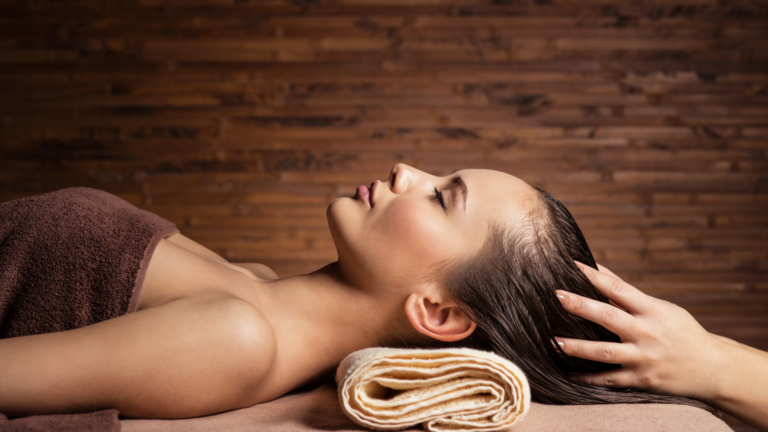
Scalp Exfoliation: How Often Should You Exfoliate Your Scalp?

Many people focus on face and body exfoliation, but scalp exfoliation is just as important. Think of your scalp as an extension of your skin. It collects oil, sweat, and product residue that can build up over time. If left unchecked, scalp buildup can clog pores, weaken hair follicles, and even slow down hair growth.

So, how often should you exfoliate your scalp, and what are the best ways to do it? Let’s find out.

Why Scalp Exfoliation Matters

Your scalp naturally sheds dead skin cells, but sometimes this process slows down due to excess oil, sweat, or heavy hair products. Regular scalp exfoliation helps remove these skin cells and keep a healthy scalp environment.

By removing dead skin cells and product buildup, you can help balance oil production, prevent itchiness, and improve blood circulation to the hair follicles, all of which support stronger and healthier hair.

How to Exfoliate Your Scalp

scalp scrub

There are two main types of scalp exfoliants:

  1. Physical exfoliants, such as scalp scrubs, which use fine particles to manually lift away dead skin cells.

  2. Chemical exfoliants, which rely on gentle acids like glycolic acid to dissolve skin cells and clear away buildup.

If you’re wondering how to exfoliate your scalp, start with a product made specifically for the scalp, not your face or body. Massage it gently on your scalp in circular motions for a few minutes, then rinse thoroughly. Avoid using your nails, and let the exfoliants do the work.

Can Clarifying Shampoos Help with Scalp Exfoliation?

purifying shampoo

Yes! Clarifying shampoos can act as mild exfoliants. They are formulated to deeply cleanse the scalp and remove product buildup, dead skin cells, and excess oil that regular shampoos might miss. While they do not physically scrub the scalp, their surfactant-rich formulas work like a detox to refresh your scalp and improve the overall scalp environment.

When choosing a clarifying shampoo, look for ingredients such as:

  • Salicylic acid or glycolic acid: helps dissolve dead skin cells and unclog hair follicles.

  • Tea tree oil or peppermint oil: soothes the skin and reduces flaking on the scalp.

  • Witch hazel: controls oil production without over-drying your scalp.

A good example is the Aromase Scalp Purifying Liquid Shampoo, which combines which combines glycyrrhetinic acid complex, glycolic acid and other herbal extracts to gently purify and rebalance the scalp, ideal for maintaining a healthy scalp between professional exfoliating treatments.

Just remember not to overuse clarifying shampoos. For most people, once to twice every week is enough to keep your scalp clean without stripping it of natural oils.

How Often Should You Exfoliate Your Scalp?

How often you can exfoliate depends on your scalp type and lifestyle.

  • Oily scalps: Once or twice a week helps manage sebum and dead skin cells.

  • Dry or sensitive scalps: Every two weeks may be enough to avoid irritation.

  • Normal scalps: Weekly exfoliation can keep your scalp clean without over-stripping it.

If you notice flaking, tightness, or sensitivity on your scalp, it could mean you’re exfoliating too frequently. Adjust your scalp care routine based on how your scalp feels.

Professional Scalp Exfoliation Treatment

For a professional treatment option, SSKINS offers the HydroJet Scalp Refresh, a targeted scalp exfoliating treatment that deeply cleanses and revitalises the scalp using hydro-powered exfoliation and nutrient infusion. It’s designed to detoxify your scalp and restore balance for improved scalp health and hair growth.

Final Thoughts

Scalp exfoliation isn’t just about removing flakes or oil. It’s an essential part of keeping your scalp and hair in their best condition. Whether you use scalp scrubs, scalp exfoliators, or a professional scalp exfoliating treatment, regular care helps maintain a healthy scalp, supports natural hair growth, and enhances the effectiveness of your hair care routine.

If you’re unsure about the right products or exfoliants, consult a healthcare provider or scalp specialist. With the right care routine, you can enjoy a cleaner, healthier, and more balanced scalp, the true foundation of beautiful hair.

You might enjoy these

You might
enjoy these

A well-defined jawline is often seen as a sign of youth and strength. Today, achieving jawline contouring no longer requires surgery. Modern non-invasive treatments can create a more sculpted, lifted appearance, all without downtime.

If you’ve ever wondered what is jawline contouring, how it works, or what kind of results you can expect, here’s everything you need to know.
When people talk about hair care, they often focus on conditioners, serums, and masks, but rarely on the scalp itself. The truth is, a healthy scalp is the foundation for strong, shiny hair. One of the most overlooked factors in scalp health is pH balance. It plays a vital role in how your hair and scalp function, how well your hair grows, and even how your hair looks day to day.
We spend more time than ever in front of our phones, laptops, and tablets, but have you ever wondered what all that screen time is doing to your skin? While blue light is best known for affecting your eyes, growing research shows it can also impact your skin’s health and appearance.
If you have ever looked closely at your skincare labels, you have probably come across niacinamide. But what is niacinamide, and why has it become one of the most trusted ingredients in modern skin care products?

Let’s explore what makes this form of Vitamin B3 such a versatile hero for almost every skin type.
Everyone wants smoother, younger-looking skin, yet signs of ageing begin long before they become obvious. Among all the skin care ingredients available today, one in particular stands out: Retinol.

Derived from Vitamin A, it has been termed “gold standard” by many dermatology experts.
We’re all familiar with RF treatments, but is QMR slowly replacing them? Find out why!
Search